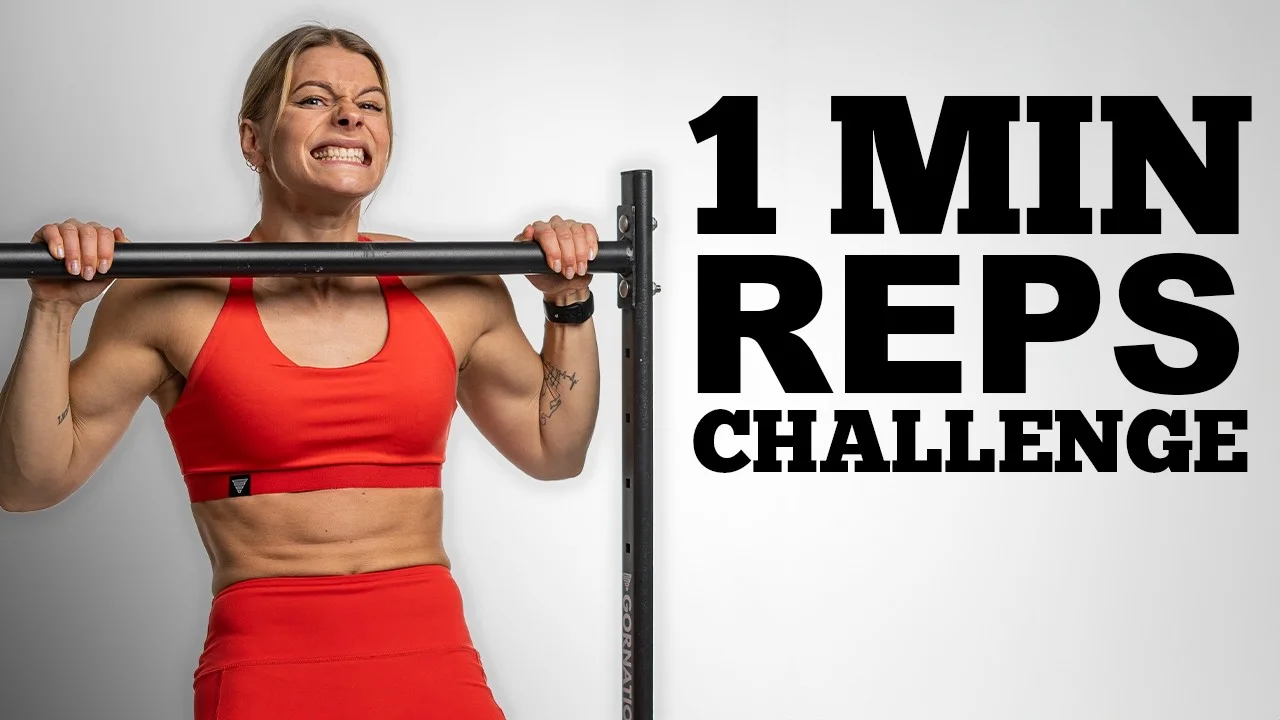
I decided to test myself with a simple but brutal challenge: how many reps can I do in one minute across three fundamental calisthenics exercises? Pull-ups, dips, and push-ups. No tricks, no kipping, just honest reps against the clock. Here's exactly what happened.
Why I Took This Challenge
I'll be honest. Endurance is not my strong suit. My training has always leaned toward skill work, strength, and competition routines. But lately, I've been incorporating more reps and sets into my programming. I wanted to see where I actually stand when it comes to pure muscular endurance.
Testing your max reps in one minute is a simple benchmark anyone can use. It doesn't require fancy equipment. It gives you a clear, measurable number. And it humbles you really fast.
I had tried a max push-up test years ago, but I'd never timed my pull-ups or dips. So this was genuinely new territory for two out of three exercises.
The Rules I Set for Myself
I kept things straightforward:
- One minute per exercise.
- Full range of motion on every rep.
- Five minutes of rest between each exercise.
- The order: pull-ups first, then dips, then push-ups.
That order matters. Pull-ups are the most demanding, so I wanted to be freshest for those. Push-ups came last, which sounds easy in theory. In practice, not so much after 60+ reps of pulling and pushing already in the bank.
Exercise 1: Pull-Ups
My goal was at least 20 pull-ups in one minute. I honestly wasn't sure if I could do it. Pull-ups are tough, and doing them for speed while keeping form is a different kind of challenge than slow, controlled reps.
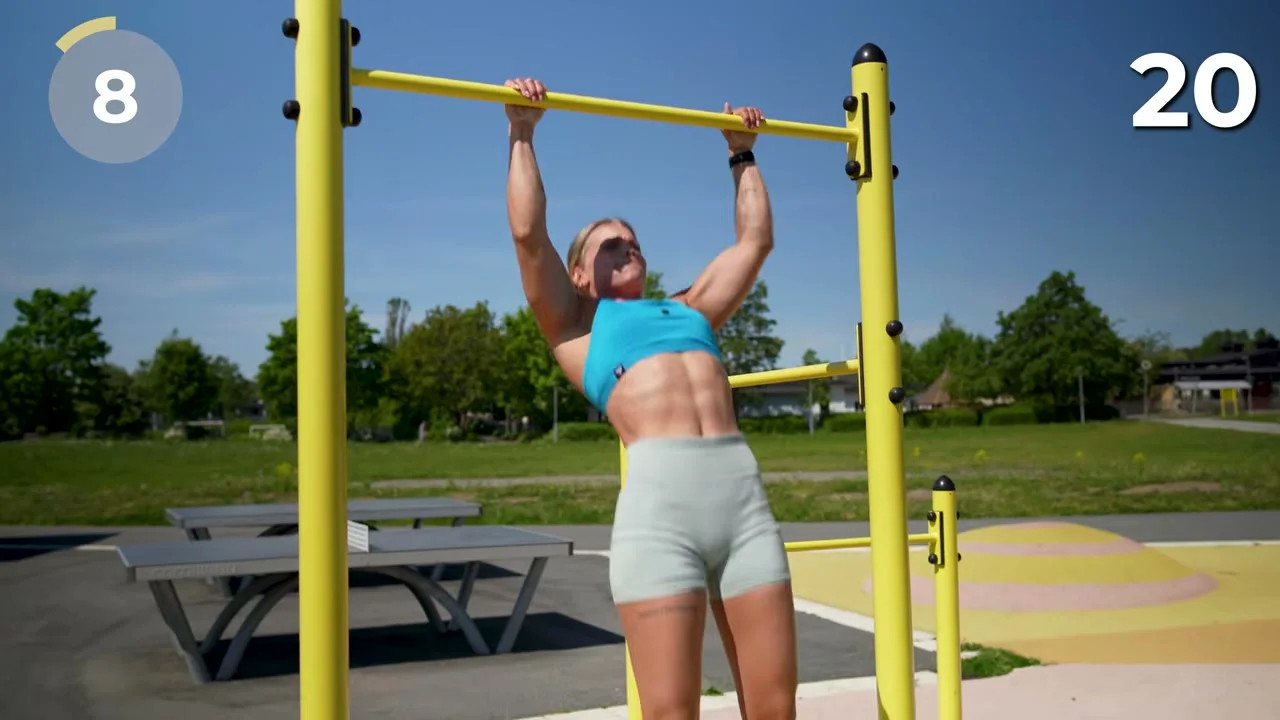
The first 14 reps came fast. Really fast. By rep 18, I could feel the pace slowing. I hit 20 with about 20 seconds still on the clock. That's when it got interesting. Every rep after 20 was a grind. My grip was burning and my lats were screaming.
Final count: 23 pull-ups in one minute.
I was genuinely happy with that. Three reps over my goal. For someone who doesn't train specifically for endurance, 23 felt like a solid number.
Exercise 2: Dips
After five minutes of rest, I moved to the dip bars. My target here was 30 to 40 reps. Dips are a movement I feel strong in, and the range of motion is a bit shorter than a full pull-up. I figured I could push the numbers higher.
The first 20 reps were smooth. Around rep 25, the burn really set in. I hit 30 right around the halfway mark, which meant I had 30 seconds to squeeze out 10 more. That's where it became a mental battle. One rep at a time. Don't think about the clock. Just move.
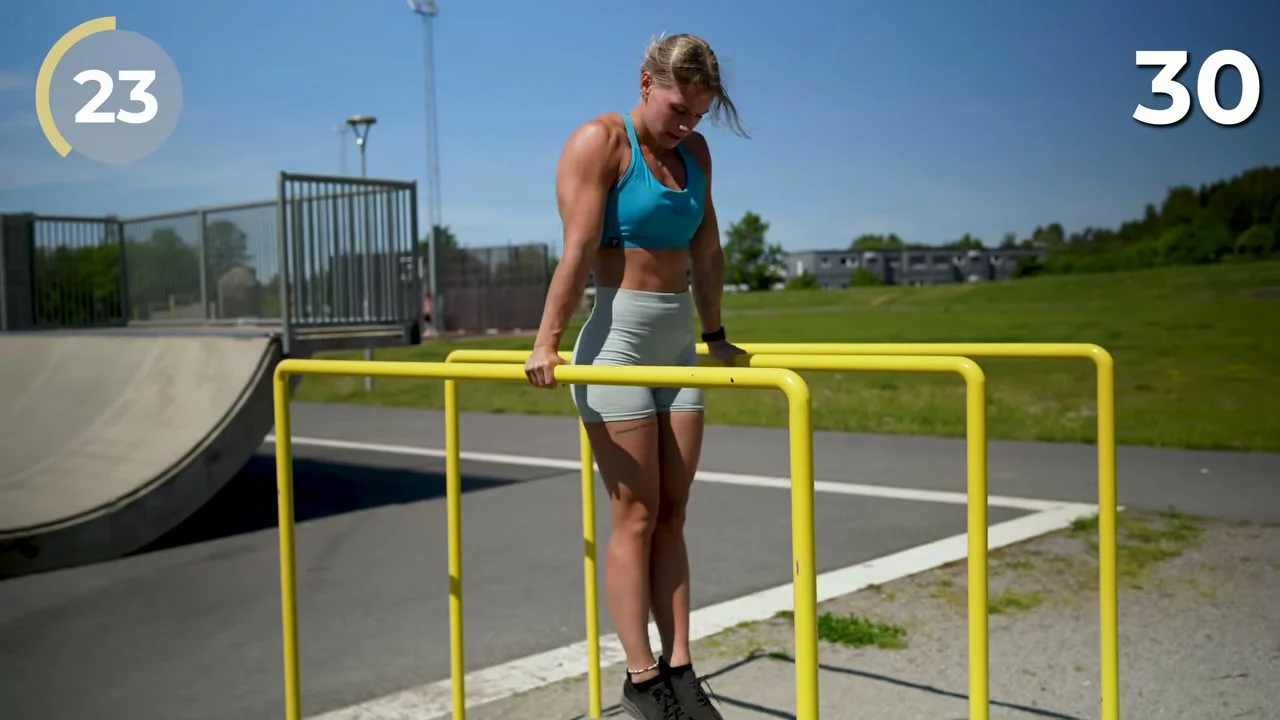
Final count: exactly 40 dips in one minute.
I hit 40 right as the timer went off. The pump after this was unreal. My chest, triceps, and shoulders felt like they were going to burst. And I still had one exercise left.
Exercise 3: Push-Ups
This should have been the easiest exercise. Push-ups are the most accessible of the three. But context matters. After 23 pull-ups and 40 dips, my pushing muscles were already fried. I didn't feel recovered even after the five-minute rest.
My goal was 50 reps. I told myself I'd be disappointed with anything less. For reference, my all-time max push-up test (not timed, just max reps to failure) was 70. So 50 in one minute after everything else felt ambitious but fair.
The first 30 reps came relatively quickly. Then the wall hit. My arms felt heavy. My chest was on fire from the dips. Every rep from 30 onward required full concentration. I kept telling myself to just keep moving. Don't stop. Don't rest at the top.
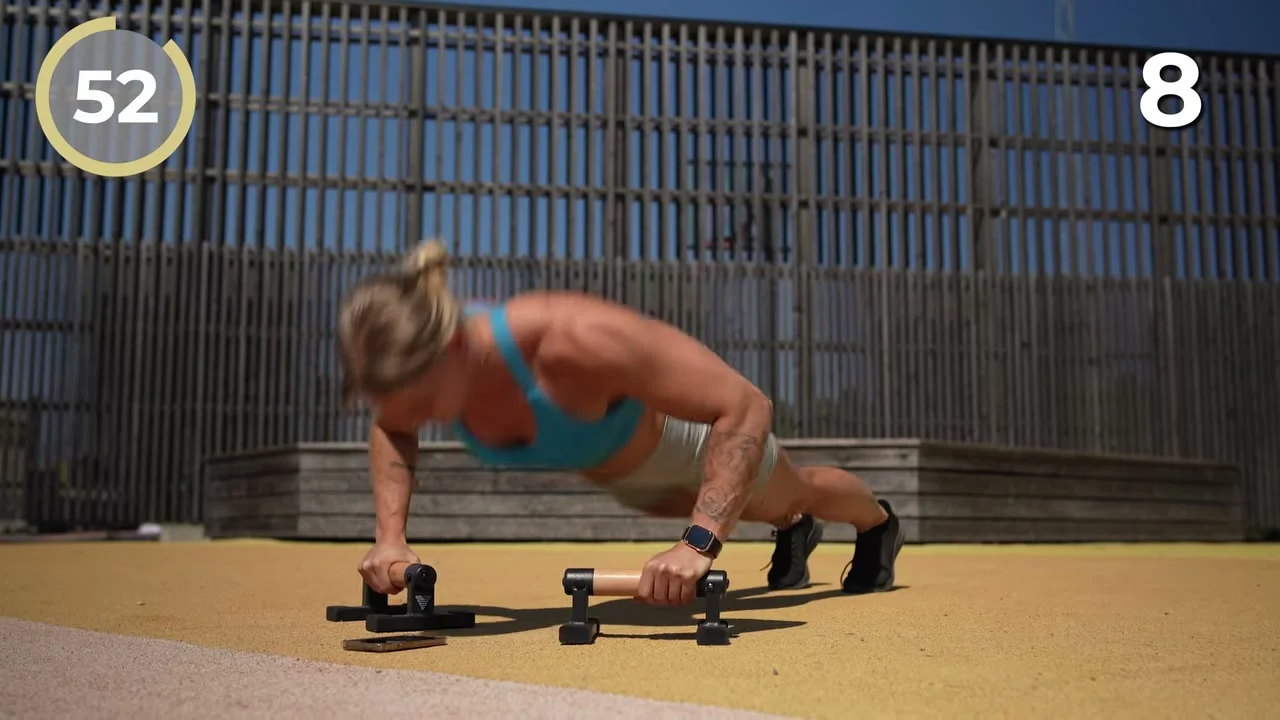
Final count: 51 push-ups in one minute.
Just barely over my goal. That last rep was pure willpower. Not pretty, but it counted.
My Total Results
| Exercise | Goal | Result |
|---|---|---|
| Pull-ups | 20 | 23 |
| Dips | 30-40 | 40 |
| Push-ups | 50 | 51 |
| Total | 100-110 | 114 |
114 total reps across three exercises in three minutes of work. I'll take that.
Key Takeaways From This Challenge
Pacing matters more than you think
Going too fast in the first 20 seconds can destroy your last 20 seconds. I learned this the hard way on pull-ups. Finding a sustainable rhythm early gives you more reps overall.
Fatigue is cumulative
My push-up number would have been much higher if it was the first exercise. The order you choose changes everything. If you try this yourself, think about which exercise you want to prioritize.
Mental toughness is the real test
After about 40 seconds, every exercise became a mental game. Your body wants to stop. Your brain has to override that signal. This kind of training builds grit that carries over to everything else.
Endurance is a separate skill
Being strong doesn't automatically mean you can do high reps. I can do weighted pull-ups and advanced calisthenics skills, but cranking out reps for a minute straight is a completely different demand. It's something I need to train more.
How to Try This Challenge Yourself
Want to test your own max reps in one minute? Here's how I'd set it up:
- Warm up properly. 5 to 10 minutes of light movement and joint circles.
- Pick your exercises. Pull-ups, dips, and push-ups are a great combo. You can swap based on your level.
- Use a timer. Set it for 60 seconds. No guessing.
- Rest 5 minutes between exercises. This gives you enough recovery to perform honestly.
- Film yourself. It keeps you accountable on form and lets you count accurately.
- Write down your numbers. Retest in 4 to 6 weeks and see how you've improved.
If you're a beginner, you can modify. Use resistance bands for pull-ups. Do bench dips instead of parallel bar dips. Do push-ups from your knees. The format works at every level.
Tips for Improving Your Max Reps
If you want to increase your numbers, here are a few training strategies that work:
- Grease the groove. Do multiple submaximal sets throughout the day. This builds volume without fatigue.
- EMOM training. Every minute on the minute, do a set number of reps. Great for building work capacity.
- Pyramid sets. Go up in reps each set, then back down. Example: 5, 10, 15, 10, 5.
- Timed sets. Practice doing reps for 30 or 45 seconds before testing the full minute.
- Weighted reps. Training with added weight makes bodyweight reps feel lighter. A dip belt or weight vest helps here.
Consistency beats intensity. Train these movements 2 to 3 times per week and the numbers will climb.
FAQ
How many pull-ups should a woman be able to do in one minute?
This varies widely based on training experience. For someone who trains calisthenics regularly, 15 to 25 is a strong range. I hit 23, and I'm a competitive athlete. If you can do 10 or more, you're doing well.
Is it better to do max reps fast or with strict form?
Always prioritize form. Sloppy reps don't count and increase your injury risk. That said, during a timed test, your form naturally loosens a bit toward the end. That's okay as long as you're still hitting full range of motion.
How often should I test my max reps?
Once every 4 to 6 weeks is enough. Testing too frequently doesn't give your body time to adapt and improve. Use the weeks between tests to actually train.
What's a good push-up count for one minute?
30 to 50 is solid for most trained individuals. Over 50 is advanced. I hit 51, but I was already fatigued from pull-ups and dips. On fresh muscles, I'd expect to hit 60 or more.
Can I do this challenge as a beginner?
Absolutely. Scale the exercises to your level. Use assisted pull-ups, bench dips, and knee push-ups. The format is the same. Set a timer, go hard, and write down your numbers. Then work to beat them next time.
If you want a structured program to build your calisthenics strength and endurance, check out my workout programs. And if you try this challenge, let me know your numbers. I'd love to see how you do.